
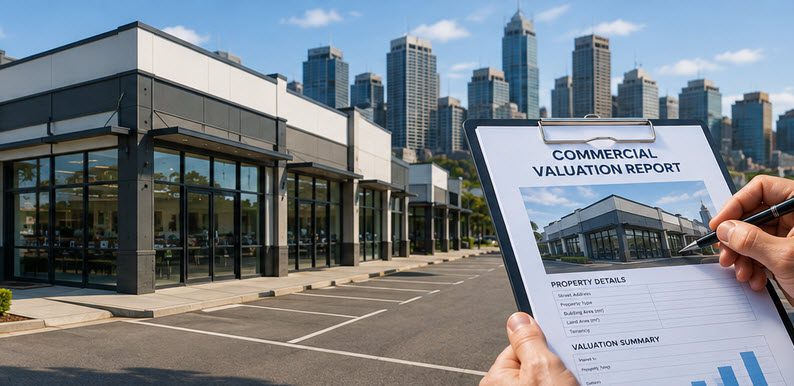
Commercial Property Valuations: How Do They Differ from Residential?
Commercial property can be a significant investment, but determining its value involves considerably more than looking at the property’s location, size and recent comparable sales.
While residential property valuations generally focus heavily on factors such as location, land size, condition, improvements and comparable residential sales, commercial property valuations in NSW can involve a much broader range of financial, leasing and investment considerations.
The income generated by a commercial property, the strength of its tenants, the terms of existing leases, rental levels, vacancy risk and overall market conditions can all influence the property’s assessed value.
For investors, business owners and property owners, understanding these differences can provide a better appreciation of what is involved when a commercial property valuation is undertaken.
Why Are Commercial Property Valuations Different?
A commercial property is often purchased not simply as a physical asset, but as an income-producing investment.
An office building, retail premises, industrial warehouse, shopping centre or accommodation property may generate rental income for its owner. As a result, the financial performance and future income potential of the property can become important components of the valuation assessment.
Property Valuations NSW provides independent valuations across commercial, industrial and retail property sectors, including office buildings, retail centres, business parks, industrial warehouses, factories, hotels, motels and other specialised properties.
The Income-Producing Nature of Commercial Property
For many commercial assets, the property’s rental income and investment characteristics need to be carefully considered.
A valuer may examine the existing rental income, market rental evidence, lease arrangements and the likelihood of the income continuing over the relevant period.
This means two commercial properties that appear similar physically may have substantially different values because of differences in their leases, tenants or income-producing potential.
Lease Analysis Is a Key Part of Commercial Valuation
One of the major distinctions between residential and commercial property is the importance of the lease.
Commercial leases can vary considerably in their length, rental arrangements, review mechanisms, incentives, outgoings and other conditions. These factors can influence the attractiveness and risk profile of the investment.
What Does a Valuer Consider When Reviewing a Commercial Lease?
Depending on the property and purpose of the valuation, relevant considerations may include:
- Current rental income
- Market rental levels
- Lease duration
- Rental review provisions
- Tenant obligations
- Vacancy periods
- Lease conditions
- Tenant quality and covenant
- Tenant mix
- Leasing risks
- Incentives and other relevant arrangements
The lease profile can provide important information about the stability and sustainability of a property’s income stream.
Tenant Quality and Security of Income
The identity and financial strength of a tenant can also be relevant to commercial property value.
A property supported by a strong tenant and favourable lease arrangements may present a different investment proposition from an otherwise similar property with a higher perceived vacancy or income risk.
Income, Market Evidence and Investment Risk
Commercial valuation is not based on one factor alone. A Certified Practising Valuer considers a combination of property characteristics, market evidence and investment factors to form an independent opinion of value.
Analysing Rental Evidence
Understanding current market rents is important when assessing an income-producing property. A valuer may consider comparable leasing evidence and the property’s specific characteristics when forming an opinion about its rental potential.
Considering Market Risk
Commercial property can be exposed to a range of market risks, including changes in demand, vacancy levels, economic conditions, interest rates and investor sentiment.
The valuation process therefore requires consideration of the broader market as well as the individual property.
Location Still Matters in Commercial Property Valuation
Although income and leasing factors are important, location remains a fundamental consideration.
The suitability of a location can vary depending on the type of commercial property being assessed.
Retail Property
For retail assets, factors such as exposure, accessibility, parking, surrounding development, customer catchment and tenant mix can influence the property’s appeal.
Industrial Property
For industrial properties, access, functionality, building configuration, services, transport connections and surrounding industrial activity may be particularly relevant.
Commercial Office Property
Office properties may be influenced by factors including accessibility, building quality, available facilities, parking, surrounding amenities, tenant demand and local office market conditions.
Property Valuations NSW notes that factors such as floor plan and functionality, services, location, building quality, exposure and parking may all form part of a commercial, industrial or retail valuation assessment.
Commercial Property Valuation Methods
The methodology used for a commercial valuation depends on the nature of the property and the purpose of the assessment.
Income-Based Approach
For income-producing properties, the income approach may be relevant because the property’s earning capacity forms an important part of its investment characteristics.
This approach considers the relationship between income, market rental evidence and the property’s overall investment profile.
Direct Comparison and Sales Evidence
Comparable sales can also provide important evidence of market value. A valuer examines relevant transactions and considers the differences between the subject property and comparable properties.
Other Valuation Considerations
Some properties require additional analysis because of their specialised nature, development potential or particular characteristics.
The appropriate methodology is determined according to the property being assessed, the available market evidence and the purpose of the valuation.
When Might You Need a Commercial Property Valuation?
There are many reasons an independent commercial property valuation in NSW may be required.
Property Valuations NSW provides commercial, industrial and retail valuations for purposes including:
- Commercial property purchase or sale
- Fair market valuation
- Commercial rental assessments
- Market rental reviews
- Capital Gains Tax
- Stamp Duty
- Financial reporting
- Family law matters
- Compulsory acquisition
- Insurance replacement cost
- Rating and taxing matters
- Property feasibility studies

Commercial Property Purchase
Before purchasing a commercial asset, an independent valuation can provide an objective assessment of market value to assist with an important investment decision.
Commercial Property Sale
For owners preparing to sell, a professional valuation can provide an independent benchmark against which proposed pricing and market evidence can be considered.
Taxation and Financial Reporting
Commercial valuations may also be required for specific taxation, accounting and financial reporting purposes, depending on the circumstances.
Why Choose an Independent Commercial Property Valuer?
Commercial property transactions can involve substantial sums of money, making reliable valuation advice particularly important.
An independent valuation provides an objective assessment prepared by a qualified professional rather than a price estimate designed for marketing purposes.
Property Valuations NSW states that its commercial, industrial and retail valuations are undertaken by accredited, insured and API Certified Practising Valuers in accordance with Australian Property Institute guidelines.
Experience Across Different Commercial Property Types
Commercial property is not one single category. Office buildings, retail premises, industrial facilities, hotels, motels and specialised properties can each have different valuation considerations.
Property Valuations NSW provides valuation services across a broad range of commercial, industrial and retail property types.
Detailed Commercial Valuation Reports
A commercial valuation report can incorporate an independent assessment of market value together with relevant property, legal, sales and market information.
Property Valuations NSW advises that its commercial valuation reports can include recent sales information, market analysis, property details, surrounding development information and supporting commentary.
Commercial Property Valuations Across NSW
Commercial property valuation requires an understanding of both the physical characteristics of the asset and the financial and market factors that influence its performance.
Whether you’re considering purchasing a commercial investment, preparing to sell an existing asset, reviewing rental arrangements or requiring a valuation for taxation or financial purposes, independent professional advice can provide valuable evidence of market value.
Property Valuations NSW provides independent commercial, industrial and retail property valuations across its NSW service areas, with extensive experience across different property types and valuation purposes.
Need a Commercial Property Valuation?
If you require an independent CGT valuation anywhere in New South Wales, Property Valuations NSW can provide comprehensive valuation reports prepared by experienced Certified Practising Valuers.
Contact Property Valuations NSW to discuss your Capital Gains Tax valuation requirements and obtain independent advice supported by local market expertise.
Contact Property Valuations NSW to discuss your commercial valuation requirements and obtain a professional valuation tailored to your property.